
HomeAbout
Services
General PhysiotherapySports PhysiotherapyExercise RehabilitationDry NeedlingRemedial Massage
FeesContact
Book OnlineCall 08 6113 8062
Move Physiotherapy group exercise rehabilitation class
Group ExerciseRehabilitationExercise Physiology

Why We Believe Our Group Classes Are the Best Path Forward for Your Recovery

Daniel Ryan
Daniel Ryan
Senior Physiotherapist · Founder, Move Physiotherapy
22 April 2026 · 8 min read

When most people hear "group class," they picture a gym full of people doing burpees with no one watching. Our group exercise rehabilitation classes are the opposite of that — and I want to explain exactly why we believe they represent the best rehabilitation environment for most people managing injury or building long-term physical capacity.

This is a genuine clinical position, not a sales pitch. There are real reasons — rooted in exercise science and what we observe in practice — why a well-run group rehabilitation class frequently produces better outcomes than individual physiotherapy sessions alone.

Small groups. Real supervision.

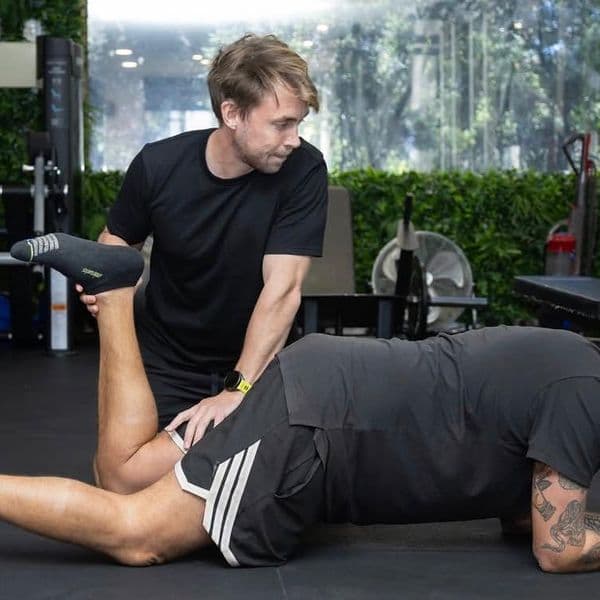
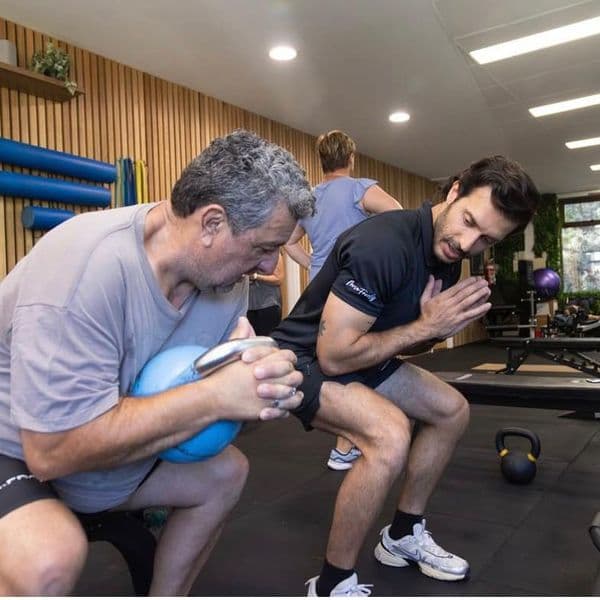
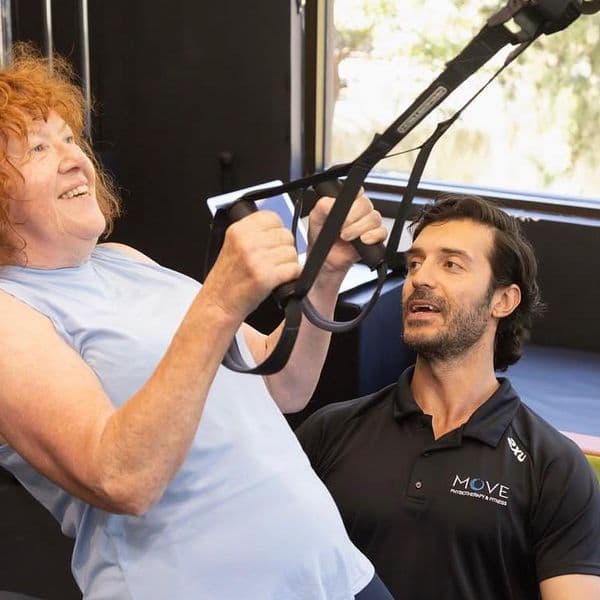
Our sessions are capped at four patients to one physiotherapist. That is not a compromise — it is a deliberate clinical decision. With four people, your physiotherapist can watch every rep, cue technique in real time, and progress your load appropriately across the session. Nothing gets missed.

Compare that to what most people do between individual physio appointments: a sheet of exercises, done at home, with no one watching, often with form that has drifted from what was originally taught. The supervision gap in standard physiotherapy is one of the most significant — and least discussed — barriers to rehabilitation progress.

The load problem — and why most people don't work hard enough

This is the clinical issue I see most consistently in rehabilitation: people are not loading their injuries sufficiently to drive the adaptations they need. This is especially true for tendon injuries, where the evidence is clear that meaningful structural change requires loading at approximately 70% of maximum voluntary contraction or above.2

When patients exercise alone — even with the best intentions — they tend to underload. Pain is uncomfortable. Fatigue is uncomfortable. Without a physiotherapist present to distinguish between discomfort that is productive and discomfort that is a warning sign, the natural response is to back off. This is not weakness. It is a completely rational response to uncertainty about injury.

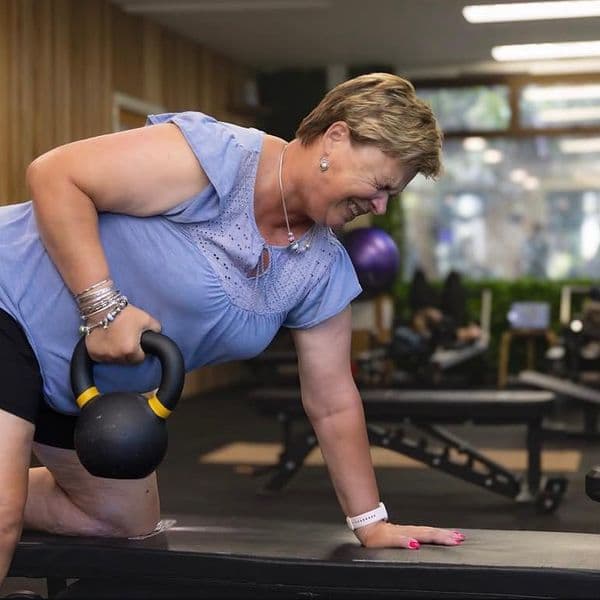
In a supervised group session, we can push load appropriately — because we are watching, we can answer the question "is this okay?" in real time, and we can make the call to increase or modify within the session rather than waiting for a review appointment three weeks later.
See it in action

Group classes at Move

Follow @move_phys
Group class at Move PhysiotherapyKettlebell coaching at Move PhysiotherapyDumbbell rehabilitation at Move PhysiotherapyTRX strength training at Move PhysiotherapyExercise coaching at Move Physiotherapy

The cost reality — and what it means for your recovery

Individual physiotherapy at Move costs $110 per session. That is a fair price for a one-on-one clinical hour — but it is also a real number. For most injuries that require consistent, progressive exercise over 8–16 weeks, the cost of weekly individual sessions is prohibitive. People either reduce their frequency before they have finished their rehabilitation, or they stop attending altogether.

Our group classes are $60 per session before your private health insurance rebate. For most funds, the out-of-pocket cost is significantly lower than that. The practical effect is that patients can attend consistently across the full rehabilitation period — which is the single most important factor in whether rehabilitation works. Consistency, not perfection.

What a session actually looks like

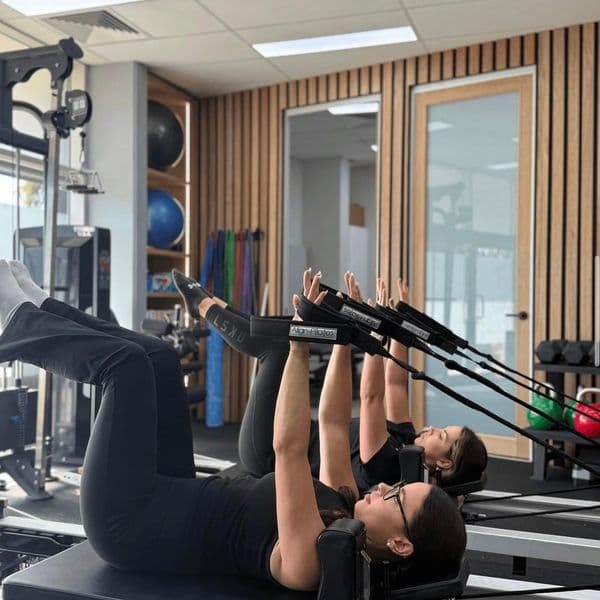
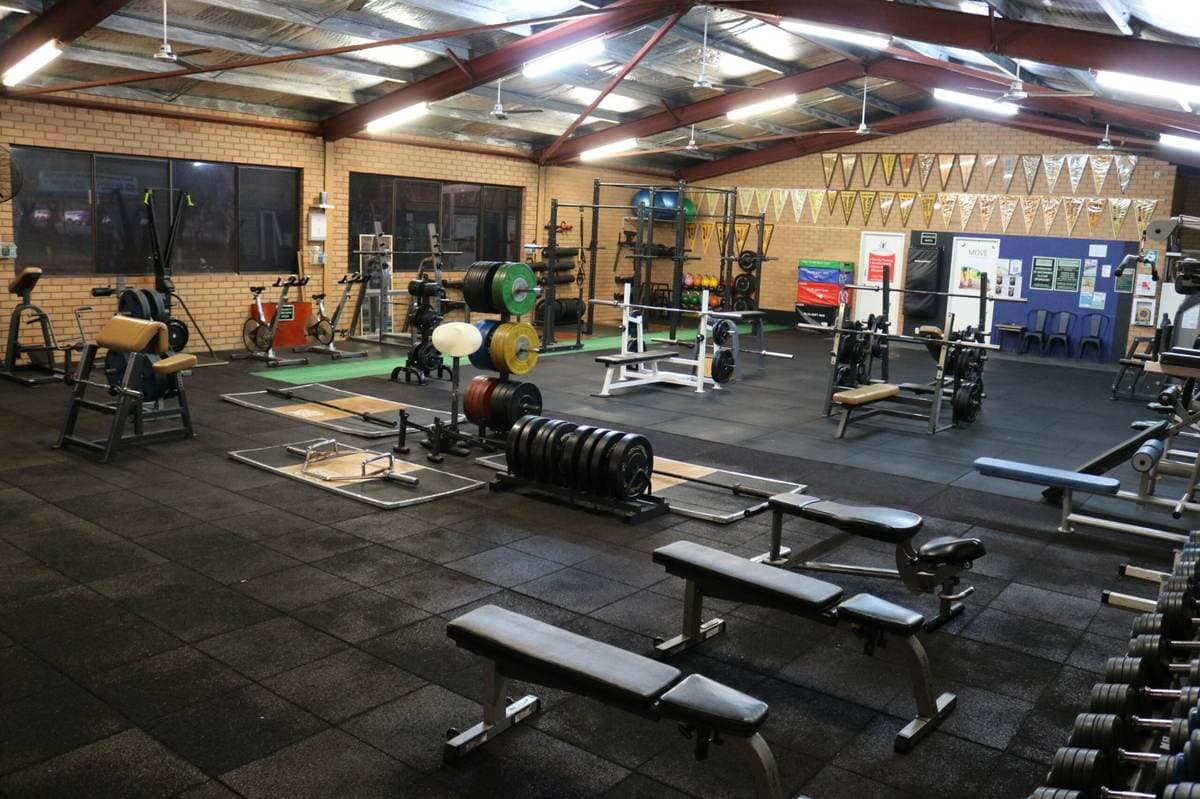
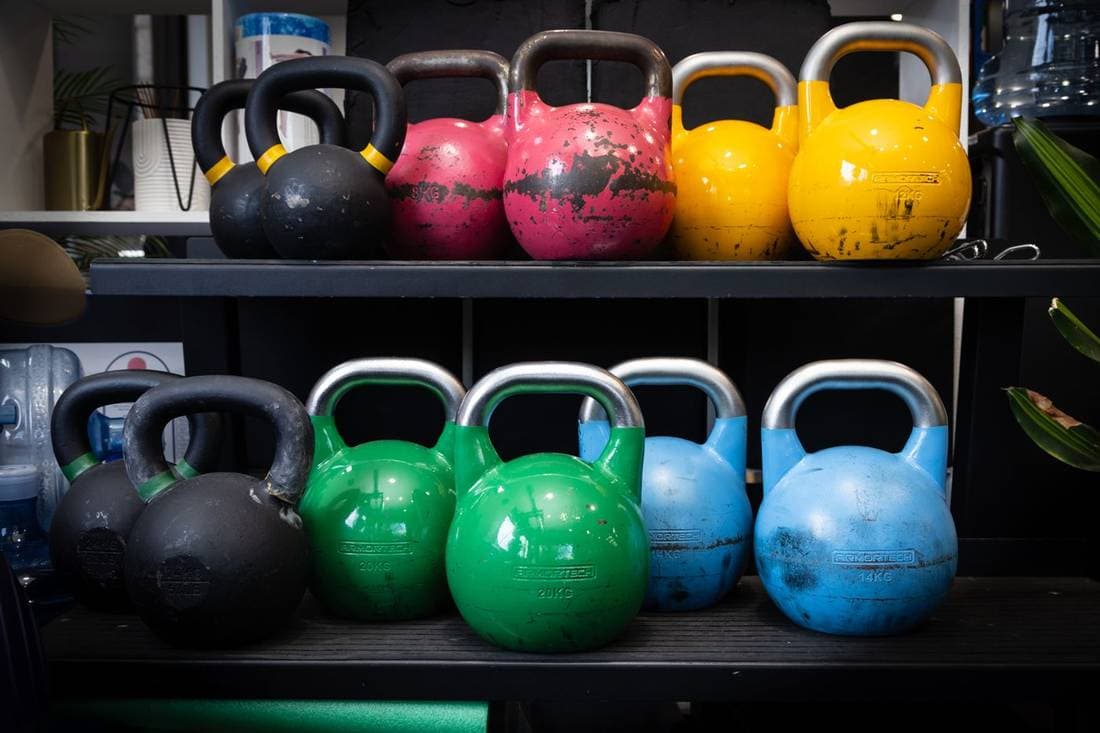
Group classes are 60 minutes — not a 45-minute session with 15 minutes of admin, but a full clinical hour of exercise. That includes appropriate rest periods between sets, which is something that gets lost when people exercise at home and feel like they should keep moving. For heavy, progressive loading — the kind that actually changes tendons, muscles, and joints — adequate rest between efforts is part of the prescription, not a concession to laziness. Sessions take place in our fully equipped gym, which means access to barbells, dumbbells, kettlebells, a Smith machine, cable machines, and more — the same equipment that produces real training adaptations, not a stripped-back clinical space with resistance bands and a mat.

Your program within the class is individual. The small group format does not mean everyone does the same exercises — it means your physiotherapist can run four different programs simultaneously, cue each person, and manage the session with the attention to detail that rehabilitation requires.

Accountability — and why needing it is not a weakness

Rehabilitation is hard. I want to be direct about that. Managing an injury while maintaining the consistency required to actually recover from it — around work, family, pain, fatigue, and the general demands of life — is genuinely difficult. The research on exercise adherence is unambiguous: people are significantly more consistent when they have a scheduled appointment and someone expecting them to show up than when they are exercising independently.5

This is not a knock on anyone's motivation or discipline. It is a structural fact about how human behaviour works, and building the environment to support consistency is one of the most evidence-based things we can do. A class on the calendar, with your physiotherapist and a small group expecting you, is categorically different from a home exercise program that can be quietly skipped without consequence.

If you have ever found yourself doing your exercises inconsistently at home despite genuinely wanting to get better, the accountability structure of a group class is likely one of the most powerful interventions available to you. It is not a substitute for motivation — it is what makes motivation unnecessary.

Move Physiotherapy group exercise rehabilitation

Group Exercise Classes

$60/session. 4 patients. 1 Physio.

Supervised rehabilitation in a small group setting. Beeliar, Booragoon and East Fremantle.

Book a Class →

Community — something we didn't fully anticipate

When we designed the group class model, the clinical rationale was clear: supervision, load progression, consistency, cost. What we did not fully anticipate was how meaningful the social dimension would become.

Managing a significant injury is isolating in a way that is hard to explain to someone who hasn't experienced it. The limitation, the uncertainty, the long timeline, the gap between where you are and where you want to be physically — these things are easier to carry alongside people who are going through something similar. Working alongside others who understand what it actually feels like to push through a heavy set when something is painful, or to celebrate a metric improving on a retest, creates a kind of solidarity that individual sessions simply cannot replicate.

It is not unusual for our class groups to head out for a coffee together afterwards. That speaks to something that goes beyond exercise — a shared experience that makes the process of recovery feel less like something you are grinding through alone.

Beyond recovery — what happens next

One of the things that gives us the most satisfaction is watching what happens after someone has completed their rehabilitation. Many people who come to us managing a specific injury — an Achilles, a post-surgical knee, a stubborn tendinopathy — find that the group class environment they started in for recovery becomes the environment they want to stay in.

The progression from injury rehabilitation to genuine strength and longevity training is natural within the group class model. The load keeps progressing. The goals shift from "manage this pain" to "build physical capacity I didn't think I had." People regularly push well beyond what they imagined possible when they first walked in managing an injury that had limited them for months or years.

That trajectory — from pain to performance — is what we are trying to make available to people. The group class is the vehicle that makes it accessible, consistent, and sustainable over the long term. For those who reach that point and want to continue training independently, our East Fremantle location also offers a gym membership option — so the environment, the equipment, and the community you built during rehabilitation remain available to you on your own terms.

Daniel Ryan
Daniel Ryan
Senior Physiotherapist · Founder, Move Physiotherapy & Fitness

Masters of Physiotherapy, University of South Australia. Founded Move Physiotherapy in 2018 across Beeliar, Booragoon and East Fremantle.

References

  1. Beyer R, Kongsgaard M, Hougs Kjær B, et al. Heavy Slow Resistance Versus Eccentric Training as Treatment for Achilles Tendinopathy: A Randomized Controlled Trial. Am J Sports Med. 2015;43(7):1704–1711.
  2. Bohm S, Mersmann F, Arampatzis A. Human tendon adaptation in response to mechanical loading: a systematic review and meta-analysis of exercise intervention studies on healthy adults. Sports Med Open. 2015;1(1):7.
  3. Burke SM, Carron AV, Eys MA, Ntoumanis N, Estabrooks PA. Group versus individual approach? A meta-analysis of the effectiveness of interventions to promote physical activity. Sport Exerc Psychol Rev. 2006;2(1):19–35.
  4. Gellert P, Ziegelmann JP, Schwarzer R. Affective and health-related outcome expectancies for physical activity in older adults. Psychol Health. 2012;27(7):816–828.
  5. Dishman RK, Buckworth J. Increasing physical activity: a quantitative synthesis. Med Sci Sports Exerc. 1996;28(6):706–719.

Ready to try a class?

$60 per session before private health. Beeliar, Booragoon and East Fremantle.

Book OnlineMore Articles →