HomeAbout
Services
General PhysiotherapySports PhysiotherapyExercise RehabilitationDry NeedlingRemedial MassageMedicare / EPCWorkCover & ICWADVA Physiotherapy
ConditionsFeesContact
Book OnlineCall 08 6113 8062
★★★★★4.9 · 381 Google Reviews

Expert Local Knee Pain Physiotherapy

From acute sports knee injuries to long-standing knee pain -- accurate diagnosis and rehabilitation that actually solves the problem.

Knee Injuries

Expert Local Knee Pain Physiotherapy

The knee is the most commonly injured joint in sport and one of the most frequent sources of chronic pain in the general population. It absorbs significant load with every step, squat, and change of direction -- and when the surrounding muscles are not doing their job adequately, the structures within the joint pay the price.

Knee pain is rarely just about the knee. In most cases, the driver is weakness or poor control in the hip and quadriceps muscles, faulty movement patterns, or excessive load relative to tissue capacity. Common presentations include pain at the front of the knee (patellofemoral pain), inner or outer knee pain from ligament or tendon issues, swelling and instability following acute injury, clicking or locking sensations suggesting meniscal involvement, and pain that gradually worsens with running or sporting activity.

At Move Physiotherapy, we see the full spectrum of knee presentations -- from acute ligament injuries and post-surgical rehabilitation to chronic tendon pain and osteoarthritis. Every assessment begins with accurate diagnosis: identifying not just what hurts, but why. Treatment combines hands-on therapy with targeted strengthening, and where indicated, our VALD and AxIT technology provides objective data to guide your progression.

Knee Injuries
Knee Injuries
VALD · AxIT Systems

Technology-Based
Injury Assessment

Included gap-free with every initial assessment.

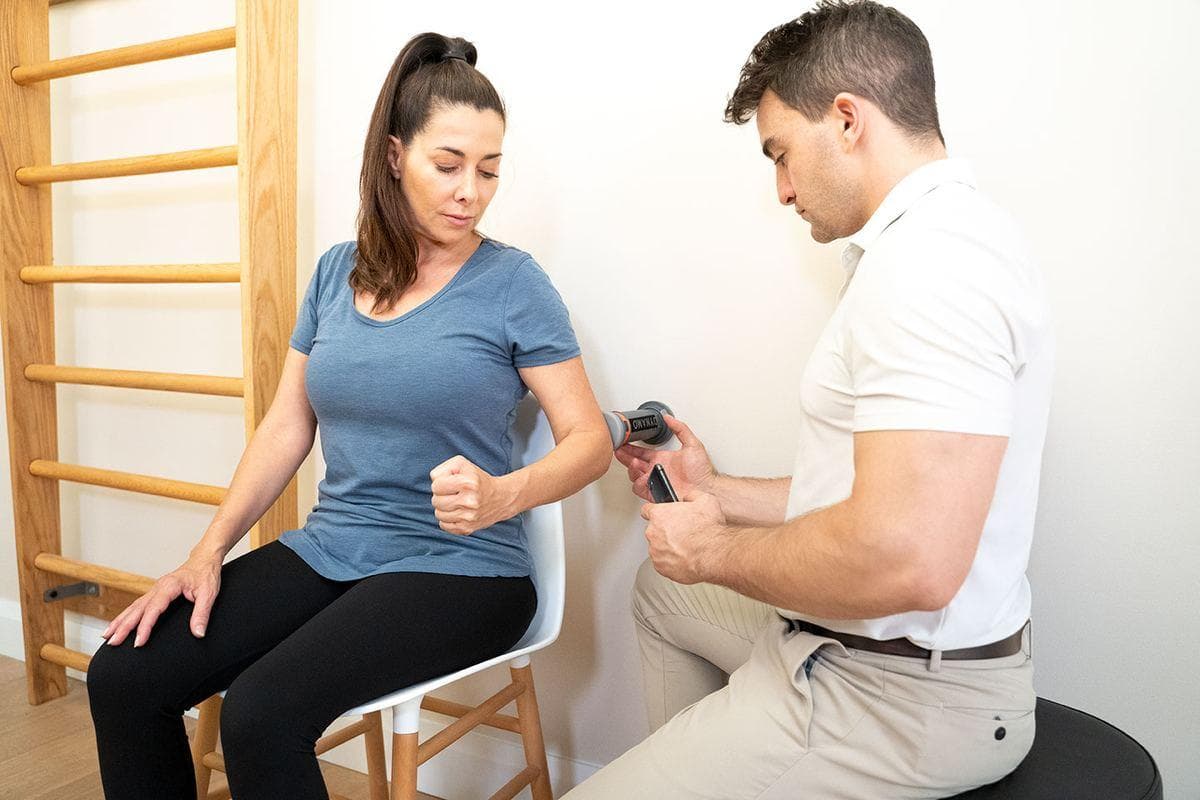
Move Physiotherapy uses VALD and AxIT force measurement technology — the same systems used by AFL, NRL and Olympic programs — to objectively measure your strength, symmetry and recovery. This means your physiotherapist can track your progress with clinical precision, making data-driven decisions at every stage of your rehabilitation rather than relying on subjective estimates.

📊
Limb Symmetry Index (LSI)
Track strength symmetry between limbs objectively — the key metric for safe return to activity.
🏋️
Force Plate Testing
Measure landing mechanics, single-leg stability, and explosive power with real data.
Objective Stage Gates
Technology removes subjectivity from progression decisions — you advance when the numbers confirm readiness.
VALD technology assessment at Move Physiotherapy

Gap-free with every initial assessment

Technology-based assessment is included as standard — no additional out-of-pocket cost.
Causes

Common Causes of Knee Injuries

Patellofemoral pain syndrome (runner's knee)
Ligament sprains (ACL, PCL, MCL, LCL)
Meniscus tears (acute or degenerative)
Patellar tendinopathy (jumper's knee)
Iliotibial band syndrome
Knee osteoarthritis
Osgood-Schlatter disease (adolescents)
Bursitis (prepatellar or infrapatellar)
Fat pad impingement
Plica syndrome
Post-surgical rehabilitation (ACL reconstruction, meniscectomy)
Referred pain from the hip or lumbar spine

Our Approach

The Move Process

01
Accurate Diagnosis
Knee pain has many causes -- and the treatment differs for each. A thorough clinical assessment including special tests for ligament integrity, meniscal provocation, and patellofemoral loading ensures we treat the right structure, not just the symptom.
02
Hands-On Treatment
Joint mobilisation, soft tissue release, patellar taping, and dry needling to reduce pain, restore range of motion, and prepare the knee for progressive loading. Pain reduction creates the window for rehabilitation to work.
03
Strength & Load Rehabilitation
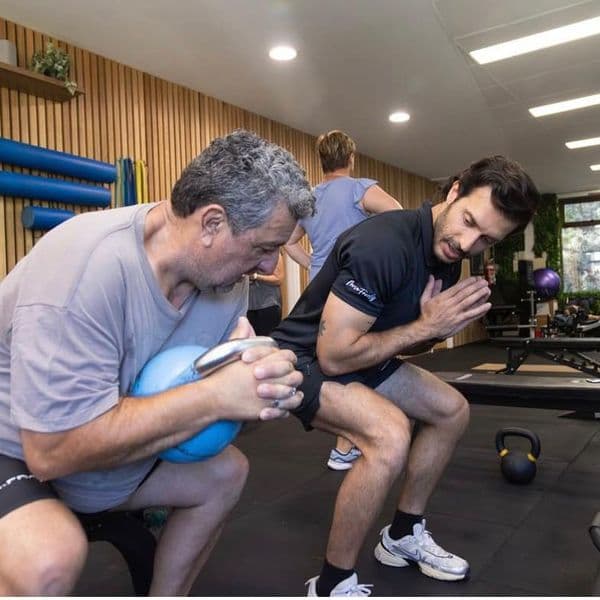
The majority of knee conditions are underpinned by deficits in quadriceps, hamstring, and hip musculature. Progressive, targeted strengthening -- using our fully equipped gym facilities -- rebuilds the capacity the knee needs to function well.
04
Movement Retraining
Many knee pain presentations are driven by faulty movement patterns -- excessive knee valgus, poor landing mechanics, or altered gait. Movement retraining corrects these patterns to reduce load on the symptomatic structures.
05
Return to Activity
Graduated return to running, sport, or daily activity with clear, objective criteria at each stage. We use VALD technology to confirm readiness -- not guesswork -- before clearing you for full activity.

Why Move Physiotherapy

What sets us apart

Accurate Diagnosis First
Knee pain has multiple potential sources. We identify the specific structure involved before starting treatment -- because the right diagnosis determines the right treatment plan.
VALD Technology
Our VALD and AxIT dynamometers provide objective strength and symmetry data at every stage of rehabilitation. You see the numbers, and progression is based on those numbers -- not guesswork.
In-Clinic Gym Facilities
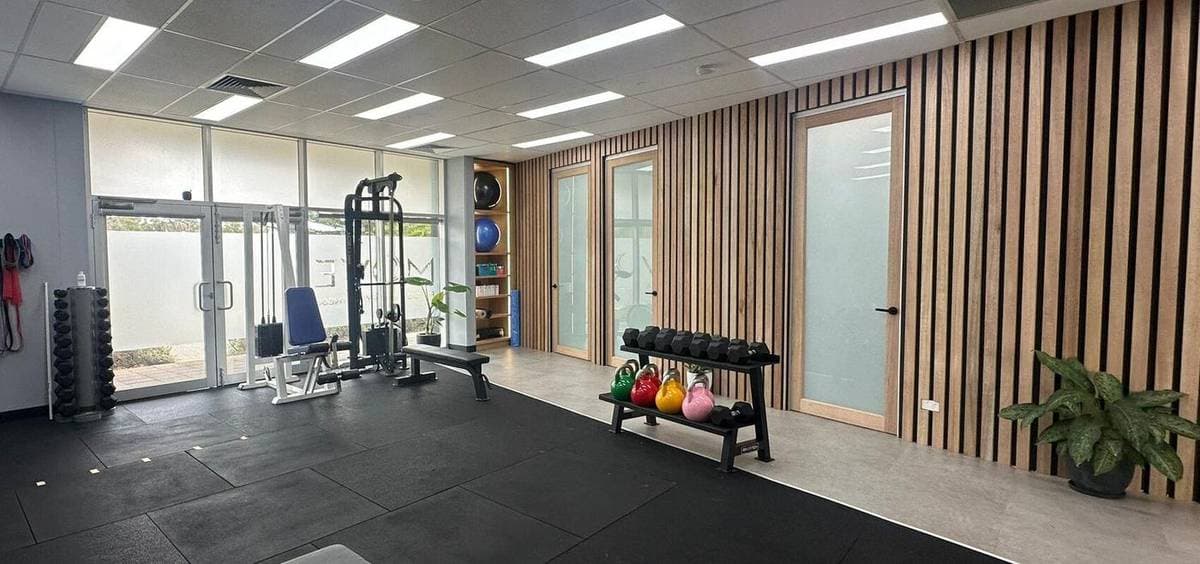
Knee rehabilitation is fundamentally a strength and loading problem. All three of our clinics have fully equipped private gyms, allowing us to progress you through the loading phases your knee needs.
Sports Injury Experience
Our team has managed knee injuries at club and elite sport level across AFL, soccer, basketball, netball, and running -- including ACL reconstructions and patellofemoral rehabilitation programs.
Surgical Pathways
We work closely with orthopaedic surgeons for cases requiring knee reconstruction, meniscectomy, or joint replacement. Pre-operative prehab and post-operative rehabilitation are both offered.
GLA:D Program for Knee OA
We offer the GLA:D program -- an evidence-based group education and exercise program for knee osteoarthritis with strong research supporting its effectiveness as a first-line treatment.
Satisfaction Guarantee
Not satisfied after your first appointment? We'll refund you in full, no questions asked. We back the quality of our initial assessments completely.
3 Convenient Locations
Beeliar, Booragoon and East Fremantle -- with early morning, evening and Saturday appointments available. Online booking takes less than 2 minutes.

Common Questions

Frequently Asked Questions

Do I need an MRI for knee pain?+
Not necessarily. Many knee conditions -- including patellofemoral pain, iliotibial band syndrome, and patellar tendinopathy -- are diagnosed clinically without imaging. For suspected ligament or meniscal injuries, an MRI provides valuable structural information and will be recommended if the clinical assessment indicates it is warranted. It is important to note that MRI findings do not always correspond to symptoms: studies show that a significant proportion of people without knee pain have "abnormal" MRI findings including meniscal degeneration and cartilage changes. Your physiotherapist will interpret imaging in the context of your full clinical picture.
Can physiotherapy help with a meniscus tear?+
Yes, and in many cases physiotherapy is the preferred first-line treatment. The METEOR and MeTeOR trials found no significant difference in outcomes between surgical and non-surgical management for degenerative meniscal tears in middle-aged patients at 6-12 months. For acute traumatic tears in younger patients, the evidence is more nuanced and depends on the tear type and stability. A structured physiotherapy program focusing on quadriceps and hip strengthening, load management, and activity modification produces good outcomes for a large proportion of patients. Surgery is reserved for cases that fail conservative management or involve specific tear patterns that are unlikely to respond.
Is running bad for my knees?+
For most people, no. A large body of evidence -- including population studies comparing runners and non-runners -- shows that recreational running is not associated with increased rates of knee osteoarthritis. In fact, some research suggests runners may have lower rates of knee OA than sedentary individuals. If running is causing knee pain, this usually reflects a loading issue: too much volume, too quickly, without adequate muscular support. Physiotherapy addresses this through load management, strength training, gait retraining, and progressive return-to-running protocols. The goal is to build your knee's capacity to handle running -- not to stop you from doing it.
What is patellofemoral pain syndrome?+
Patellofemoral pain syndrome (PFPS) -- sometimes called "runner's knee" -- describes pain around or behind the kneecap, typically aggravated by activities that load the patellofemoral joint: running, squatting, stairs, and prolonged sitting. It is one of the most common knee conditions seen in physiotherapy. The underlying driver is usually a combination of inadequate quadriceps and hip muscle strength, altered patellar tracking, and training load that exceeds the tissue's current capacity. It responds very well to physiotherapy targeting hip abductor and external rotator strengthening, quadriceps strengthening, patellar taping or bracing, and graduated load management. Most patients see significant improvement within 6-12 weeks of consistent rehabilitation.
What causes knee pain in teenagers?+
The most common cause is Osgood-Schlatter disease -- a traction apophysitis at the tibial tubercle (the bony prominence just below the kneecap) that occurs during growth spurts in active adolescents. It is not a serious condition but can be significantly painful. It is driven by the patellar tendon pulling on the growth plate during periods of rapid bone growth, and is aggravated by loading activities like running, jumping, and squatting. Management includes load modification, quadriceps flexibility work, and progressive strengthening as symptoms allow. Most cases resolve completely with skeletal maturity. Physiotherapy helps manage symptoms, prevent prolonged restriction from sport, and guide a safe return to activity.
When should I consider knee surgery?+
Knee surgery is most clearly indicated for: acute ACL rupture in athletes wishing to return to cutting and pivoting sports; locked knees from a displaced meniscal tear; acute fractures or structural instability that cannot be managed conservatively; and end-stage knee osteoarthritis where conservative management has been exhausted and quality of life is significantly impaired. For most other knee conditions -- including degenerative meniscal tears, patellofemoral pain, tendinopathy, and mild-to-moderate OA -- the evidence supports conservative physiotherapy as the first-line option. Your physiotherapist will discuss with you whether surgery is likely to be beneficial for your specific situation, and coordinate with your orthopaedic surgeon where appropriate.

Ready to get moving?

Beeliar, Booragoon and East Fremantle -- early morning, evening and Saturday appointments available.