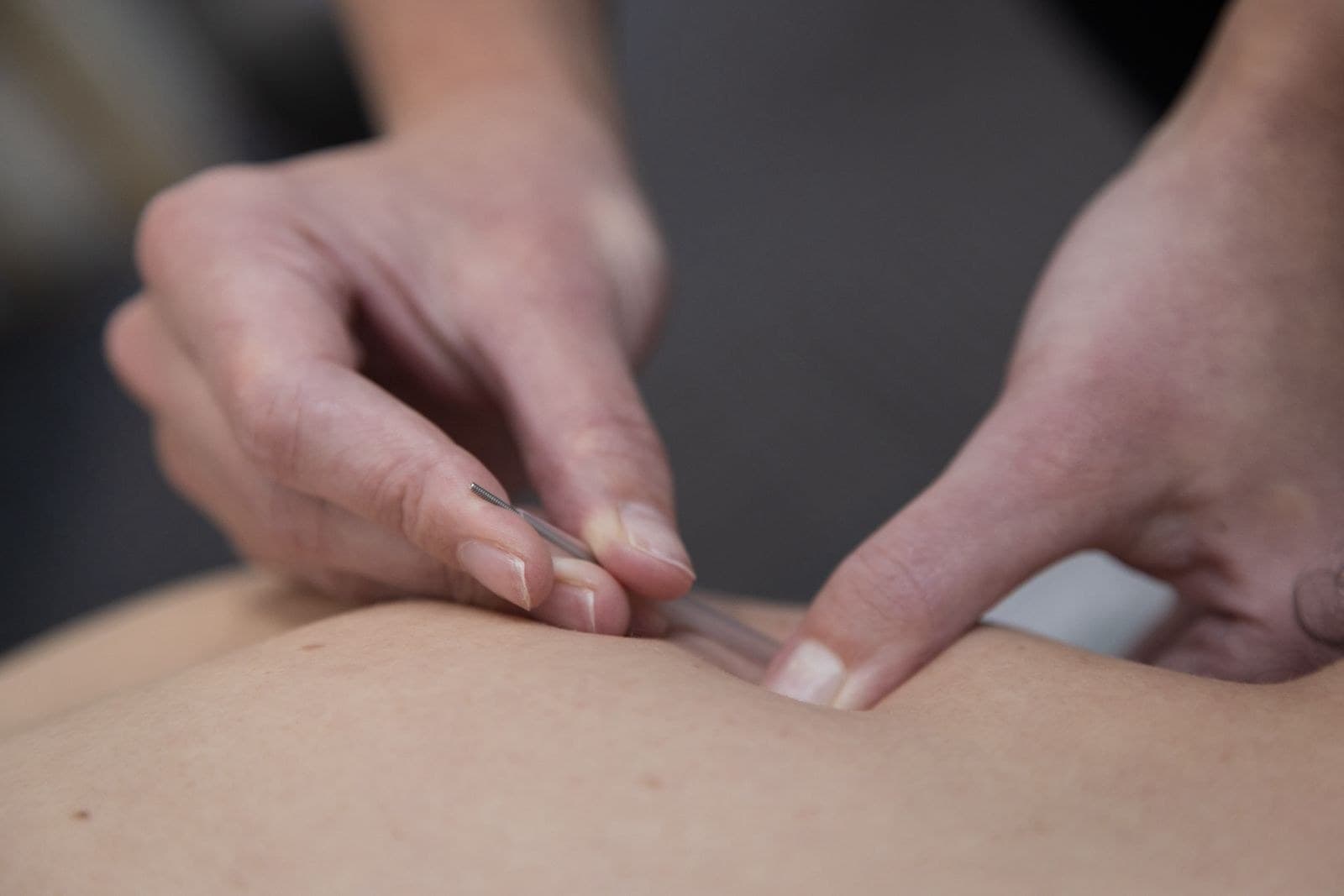

"You've got a tight hip flexor." "Your hamstrings are really tight." "Your upper traps are holding a lot of tension."
Most people hear the word "tight" and picture a muscle that has physically contracted and shortened — like a spring that's been coiled too far, taking up less space than it should. It sounds logical. Simple English would suggest that a tight muscle is a smaller, shorter muscle.
That's not what's happening.
What "tight" actually means
When a muscle feels tight, what it is almost always doing is holding more tone than usual. Muscle tone is classically defined as the tension present in a relaxed muscle — or more precisely, the resistance felt during passive stretch when the muscle is at rest.1 It has two components: an active neural component (the background electrical drive from the nervous system) and a passive viscoelastic component from the mechanical properties of the tissue itself.2
What does viscoelastic mean?
This is the boring technical part — but to be a complete knowledge source we'll include the information. The viscoelastic component simply means the physical resistance the tissue itself offers to being stretched, independent of any neural input. Even a completely anaesthetised muscle — with zero neural activity — still has some resistance to being stretched. That resistance is the viscoelastic component.
But here's the clinical observation that matters: when a patient presents with a "tight" hamstring on the left and a normal one on the right, both sides have the same passive tissue properties — same person, same muscle, same connective tissue make-up. The difference between them is neural tone. One side is receiving more background drive from the nervous system than the other. That asymmetry is the signal, and it's the thing worth understanding.
A "tight" muscle hasn't shortened or contracted in the way we think of when we lift a weight. Its resting neural drive has simply increased. The muscle fibres are firing more than they need to — generating more baseline force, creating more resistance to being lengthened, and often generating more sensation in the process.
This is an important distinction, because it changes what we do about it. A spring that's been physically compressed needs to be pulled apart. A muscle that's holding high tone needs a reason to let go.
Muscle tone isn't a flaw. It's a protective mechanism. The nervous system is the one setting the dial — and it raises it for a reason.
Why does a muscle increase its tone?
There are two main reasons — and understanding which one applies to you changes the treatment entirely.
1. It's not coping with the load being asked of it
Think of it like driving a car at 200 km/h when you can only safely control it up to 100 km/h. At some point — whether through your own nerve responses or the car's systems — something intervenes. A speed limiter kicks in. A physical or mental block that prevents you from going further than you can actually handle.
Your nervous system does the same thing with muscles. If a muscle is being asked to work at a level beyond what it can reliably produce or control, the system responds by increasing its resting tone. It stiffens up. It becomes less willing to move freely through its full range. When the brain senses that a tissue is under threat, it initiates protective muscle guarding — effectively creating a biological splint to limit movement and prevent further injury.3
The tightness isn't the problem. It's the signal that the underlying capacity is insufficient for the demand being placed on it.
The implication: stretching doesn't fix this. Research confirms why. A 2025 systematic review and meta-analysis of 65 studies found that neither acute nor chronic static stretching had a significant effect on fascicle length — the structural length of muscle fibres.4 Range of motion gains from stretching occur primarily through altered stretch tolerance and temporary reductions in tissue stiffness — not because the muscle has actually lengthened. The underlying neural drive remains unchanged.
Getting the muscle stronger — more capable of meeting the demand — is what allows the nervous system to feel safe enough to reduce that protective tone. When capacity increases, the speed limiter relaxes.
2. It's protecting something else
A tight muscle isn't always the structure that's struggling. Sometimes its job is to guard something nearby that is.
A common example: tight hip flexors. On the surface, this looks like a hip flexibility problem — the front of the hip won't lengthen, the pelvis tips forward, the lower back arches. The instinct is to stretch the hip flexors. But often those hip flexors are tight precisely because the lower back is unstable. The iliopsoas — the primary hip flexor — has been described as acting like a "guy wire" to the lumbar spine, providing spinal stiffness and stability, particularly during loading.5 Research confirms that a minimum degree of hip flexor tone is actually required for lumbar spine stability, with tightness in this region often representing a functional stabilising response rather than a pathological shortening of the muscle.6
Releasing the hip flexors in this situation provides temporary relief at best, and can occasionally make things worse — because you've removed the tension that was doing protective work. The answer to getting those hip flexors to genuinely relax is not more stretching. It's creating more stability through the spine by strengthening the other "guy wires" — the abdominals, glutes, and hamstrings that share the load of supporting the lumbar spine. When those structures are strong enough to do their job, the nervous system no longer needs the hip flexors to compensate, and the tone reduces on its own.
The second most common example is the "always on" tight upper trap — and frankly, how many of us have resigned to the fact that a monthly remedial massage is just a necessary part of life? It doesn't have to be.
It is worth noting first that a genuinely weak upper trap has a recognisable appearance — the drooping triangular shape through the shoulder, where the shoulder blade sits low and the neck looks elongated. That is weakness. What most people experience, however, is the opposite: an upper trap that is overactive, chronically elevated, and resistant to relaxing. That is not weakness. That is compensation.
The upper, middle, and lower fibres of the trapezius work together as a force couple to control the position and rotation of the shoulder blade.7 The lower trapezius in particular is responsible for scapular depression, posterior tilt, and stabilising the axis of rotation of the shoulder during arm elevation.8 When the lower trap and mid-back muscles are underperforming, the upper trap takes on a disproportionate share of the stabilising work. It has to hold the shoulder blade in place because the structures below it are not doing enough of that job.9 The result is a muscle that never fully switches off — not because it is inherently overactive, but because it is perpetually covering for a gap elsewhere in the system.
Releasing or massaging the upper trap provides temporary relief. Strengthening the lower trapezius and mid-back — the structures it has been compensating for — is what allows it to finally let go.
The same principle applies across the body. Tight hamstrings protecting an unstable pelvis. Tight adductors protecting a weaker lateral pelvic control. In each case, the tight muscle is doing a job that another structure isn't. Fix the underlying deficit, and the tone usually reduces on its own.
So what do we do about it?
The first step is understanding why the tone is elevated. Is this a capacity problem — the muscle can't meet its demands? Or is it a compensation — the muscle is covering for something else that's not doing its job?
Stretching can provide temporary relief in both cases — and there's a place for it in a broader program — but it doesn't address either root cause. The research is clear that range of motion improvements from stretching are driven largely by changes in stretch tolerance rather than structural changes to the muscle.4 Increasing the muscle's capacity through progressive loading, or strengthening the structure it's compensating for, is what allows the nervous system to genuinely back off.
This is why patients who have stretched a "tight" area for years without lasting change are often surprised by how quickly things shift when we address the underlying driver instead.
The takeaway
A tight muscle is a muscle under increased nervous system tone — not a shortened or contracted one. The tone is there for a reason: either the muscle isn't capable enough for its demands, or it's protecting something else that isn't. Identify which, address that, and the tightness tends to resolve far more reliably than any amount of stretching alone.
References
- Bhimani R, Anderson L. Clinical Understanding of Spasticity: Implications for Practice. Rehabilitation Research and Practice. 2014. doi:10.1155/2014/279175
- Physiopedia. Tone. Available at: physio-pedia.com/Tone. The ongoing tension within skeletal muscle results from passive viscoelasticity of multiple tissues and active low-level sustained muscle contraction, with neural and non-neural components.
- Erikson D. Protective Muscle Spasm. erikdalton.com. When the brain senses bony instability or tissue damage, protective muscle guarding is a common response — a reflexogenic attempt to prevent further insult to injured tissues.
- Takeuchi K, et al. Mechanisms Underlying Range of Motion Improvements Following Acute and Chronic Static Stretching: A Systematic Review, Meta-analysis and Multivariate Meta-regression. Sports Medicine. 2025. doi:10.1007/s40279-025-02204-7. Neither acute nor chronic static stretching had a significant effect on fascicle length in this meta-analysis of 65 studies.
- Bogduk N, Juker D, Hodges P. The iliopsoas as a compressor of the lumbar spine and contributor to spinal stability — described as acting like "guy wires" to stabilise the lumbar spine during various movements. Cited in: Keller G. The clinical and biomechanical effects of fascial-muscular lengthening therapy on tight hip flexor patients. International Journal of Research in Physical Therapy. 2012. PMC4262809.
- Leagrave Therapy. Hip Flexor Tension Can Contribute to Lower Back Pain and Joint Related Stiffness. leagravetherapy.co.uk. 2026. A minimum amount of tightness within the hip flexors is required for lumbar spine stability — muscles that are too tight, but also too loose, create risk.
- Vanderstukken F, et al. Scapular force couple ratios in healthy shoulders. Physical Therapy in Sport. 2022. PMC9350558. Scapular stability is mainly maintained through the optimal force couple balance of the upper, middle and lower trapezius and serratus anterior.
- Park HS, et al. Effect of trapezius muscle strength on three-dimensional scapular kinematics. Journal of Physical Therapy Science. 2016. PMC4932076. Weakness in the lower trapezius specifically affects scapular posterior tilt, disrupting normal scapulohumeral rhythm.
- Cools AM, et al. Selective recruitment of the lower fibers of the trapezius muscle. Journal of Electromyography and Kinesiology. 2007. Weakness of the lower trapezius can result in poor scapular mechanics and instability, with the upper trapezius compensating through increased activation to maintain shoulder blade control.