
"Runner's knee" is one of the most common presenting complaints in running physio — and one of the most mismanaged. Not because the condition is complex, but because the label is used loosely, the causes are multiple, and too much treatment addresses the symptom rather than what produced it.
This article covers where runner's knee is actually located, what is happening at the tissue level, the many factors that contribute to it, how to reduce pain enough to keep running in the short term, and what actually fixes it over time. This is a longer read — because the condition deserves a proper explanation, not a three-point list.
What is runner's knee — and where exactly is it?
The term "runner's knee" most commonly refers to patellofemoral pain syndrome (PFPS) — pain arising from the joint between the kneecap (patella) and the groove on the front of the femur that the kneecap slides through during knee flexion and extension.1 The pain is typically felt at the front of the knee — around, behind, or underneath the kneecap — and is reproduced by activities that load the knee in flexion: running, descending stairs, squatting, and prolonged sitting with the knee bent (the so-called "theatre sign").
Sometimes the term runner's knee is also applied to IT band syndrome, which produces pain on the outer (lateral) side of the knee and has different mechanics and management. This article focuses on patellofemoral pain — the anterior knee presentation — which is more common and has a stronger evidence base for treatment.
At a tissue level, PFPS is fundamentally a problem of load exceeding the patellofemoral joint's current capacity to tolerate it.8 The patella moves through a groove in the femur and is held in place by a combination of bony geometry, soft tissue tension (the retinaculum, quadriceps tendon, patellar tendon), and the forces produced by the quadriceps muscles. When any of these factors shifts — through weakness, tightness, altered mechanics, or increased load — the patella tracks imperfectly, contact stress increases on the articular cartilage, and pain develops.
The many causes — why "runner's knee" is rarely one thing
This is where the clinical nuance matters most. PFPS is almost never caused by a single factor — it is the result of multiple contributors combining to push the patellofemoral joint past its tolerance threshold. Understanding which combination is driving your presentation is what determines the most effective treatment.
The most consistently identified contributor in the research. Weak glutes allow the hip to drop and the femur to rotate inward during the stance phase of running, which alters the patella's tracking path and increases the contact stress between the kneecap and the groove it sits in. Female runners are disproportionately affected due to wider Q-angle anatomy.
The vastus medialis oblique (VMO) is the teardrop-shaped muscle on the inner side of the quad, and its job is to pull the patella medially during knee extension. If it is underactivated or outpaced by the lateral vastus lateralis, the patella tracks laterally and the lateral facet is compressed. Quad weakness overall also reduces the ability to control the loading rate through the knee.
PFPS is fundamentally an overload condition — the patellofemoral joint is exposed to more stress than it can currently tolerate. In runners, this most commonly presents after a sudden increase in weekly mileage, the introduction of hill training or speed work, or a return to running after a break. The tissue adaptation lags behind the load, and pain is the signal that the gap has become too wide.
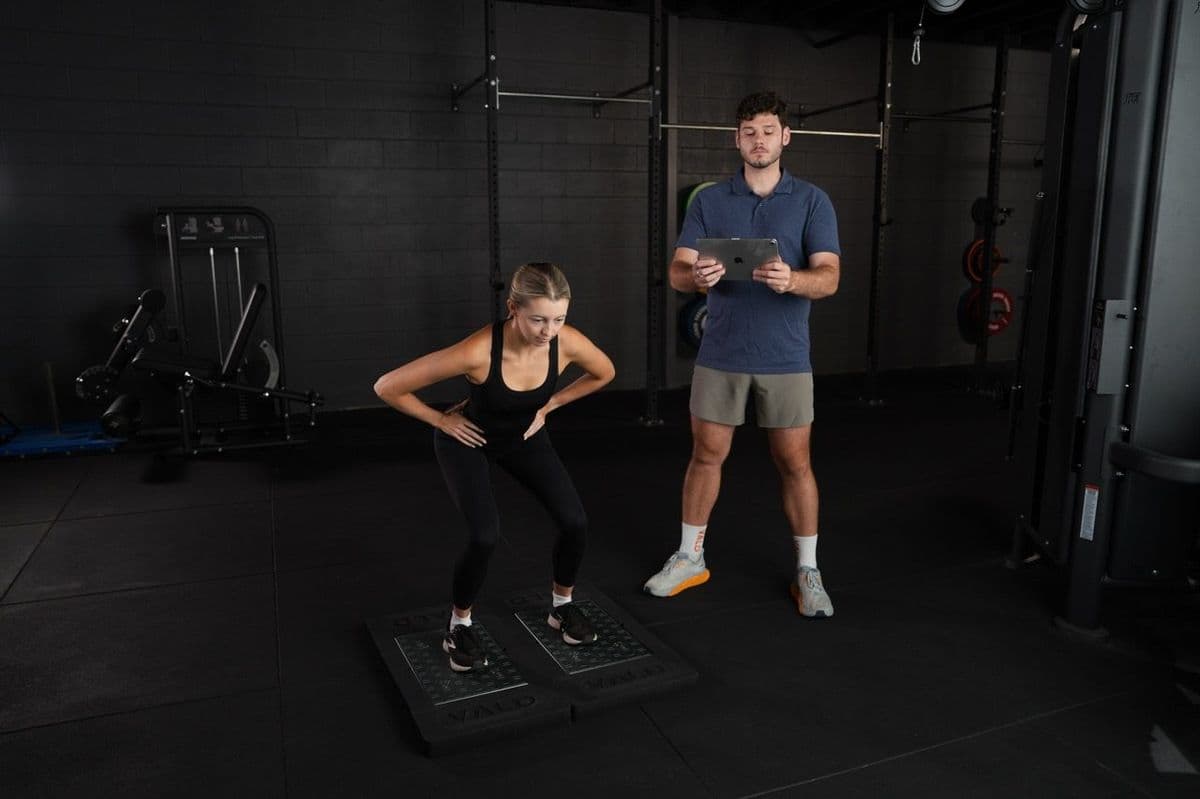
Increased peak knee flexion angle under load, excessive contralateral pelvic drop (Trendelenburg), increased hip adduction and internal rotation at midstance, and a low running cadence all increase patellofemoral joint stress. Importantly, most of these are trainable — they respond to both strength work and gait retraining.
Excessive or poorly controlled pronation at the foot causes a chain reaction upward — internal tibial rotation, increased femoral internal rotation, and increased valgus load at the knee. This is one reason orthotics are sometimes trialled in PFPS, though the evidence is stronger for addressing hip and quad strength as primary drivers.
A tight IT band, lateral retinaculum, or lateral quadriceps can pull the patella laterally, compressing it against the outer surface of the femoral groove. This is a contributing factor in some presentations, but it is rarely the primary cause and foam rolling alone is not a solution.
The key clinical implication of this list is that every runner with patellofemoral pain needs an individual assessment — not a generic knee program. The runner with PFPS driven primarily by hip weakness needs a very different program to the runner whose main driver is a rapid training load increase with adequate strength. Treating the right thing matters more than treating hard.