
HomeAbout
Services
General PhysiotherapySports PhysiotherapyExercise RehabilitationDry NeedlingRemedial Massage
BlogFeesContact
Book OnlineCall 08 6113 8062
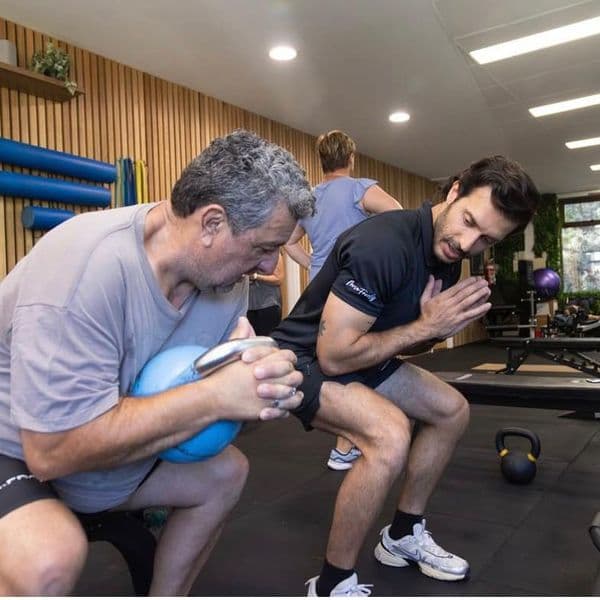
Older adult squatting under supervision at Move Physiotherapy Beeliar — knee osteoarthritis programme
Knee PainOsteoarthritisBeeliar

How to beat knee arthritis without surgery

“Bone on Bone” Knees: What It Actually Means, and How to Beat Knee Arthritis Without Surgery

Daniel Ryan
Daniel Ryan
Senior Physiotherapist
15 May 2026 · 11 min read

You went in because your knee was hurting. You came out with three words you can't stop thinking about.

“Bone on bone.”

Maybe a GP said it. Maybe the radiographer pointed at the X-ray and used the phrase. Maybe a friend who saw your scan said it out loud. However it landed, the words sat in your head on the drive home and they probably haven't fully left since.

You started doing the maths. How long until you can't take the stairs. How long until you can't walk the dog. Whether you'll be one of the people who ends up with a replacement, and how soon. Whether to stop the things you love now, in case you're making it worse.

Here's what we want you to know before you read another paragraph. The phrase you heard is real, but it doesn't mean what you almost certainly think it means. And the path forward — the one that the Australian clinical guidelines actually recommend you try first — is far less dramatic, far less invasive, and far more effective than most patients are ever told.

What “bone on bone” actually means on an X-ray

When someone says your knee is “bone on bone,” what they actually mean is that on the X-ray, the visible gap between your thigh bone (the femur) and your shin bone (the tibia) has narrowed. That gap, in a healthy knee, is occupied by cartilage. When the cartilage thins, the gap closes. Closer bones on the X-ray, less cartilage in the joint.

What it does not mean is that your bones are literally grinding against each other every step you take. It does not mean your knee is “destroyed.” It does not mean you have run out of options. It's a poor predictor of how much pain you actually feel, and an even poorer predictor of how well you can move.

Why what you saw on the X-ray isn't the whole story

A systematic review of imaging and pain in knee osteoarthritis, summarising the literature across multiple studies, found a weak and inconsistent relationship between what the X-ray shows and what the patient experiences.2 Some people with the worst-looking X-rays walk three kilometres a day with minimal symptoms. Other people whose X-rays look mild can barely climb a flight of stairs.3

Australia's 2024 Osteoarthritis of the Knee Clinical Care Standard puts this in clinical guidance for every GP in the country. The standard explicitly states that imaging should not be used as the primary tool to diagnose or grade knee osteoarthritis, because doing so leads to overtreatment of structural findings that aren't clinically meaningful.1 Translated, the people who set the rules for treating knee arthritis in Australia have told doctors to stop putting so much weight on the X-ray.

So when you stare at the image and the radiology report and feel your future shrinking, please understand: the picture you are looking at is not the variable that decides how you feel, what you can do, or what you can still get back. The variables that decide those things are the ones we're about to talk about. And every one of them is changeable.

What is actually driving your knee pain

A knee is not just cartilage. A knee is a joint surrounded by muscle, supported by ligaments and tendons, regulated by a synovial lining, and loaded by the way you stand and walk and sit. Pain in an arthritic knee can come from any of these structures, and most of them are not what the X-ray was showing.

The two biggest drivers of pain and disability in knee osteoarthritis are not the cartilage status itself. They are quadriceps weakness and inflammation. Both are highly modifiable.

Your quadriceps muscles — the big muscles on the front of your thigh — are the primary shock absorbers of your knee. When they work properly, they take load off the joint surface every time you take a step, climb stairs, or stand up from a chair. When they weaken, the joint surface absorbs more of the load itself. Weak quads make a sensitive knee more sensitive. Strong quads make a sensitive knee feel dramatically better, often within weeks.10

Inflammation is the other half of the picture. Osteoarthritis is no longer thought of as a purely mechanical “wearing out” process. It's now understood as the joint working harder to repair and regulate itself, with periodic inflammation contributing to flare ups of pain, stiffness and swelling. Inflammation responds to load, to movement, to general health, and to consistent activity. It also responds to giving the joint a break from sudden, unfamiliar stress. Both ends of that are within your control.
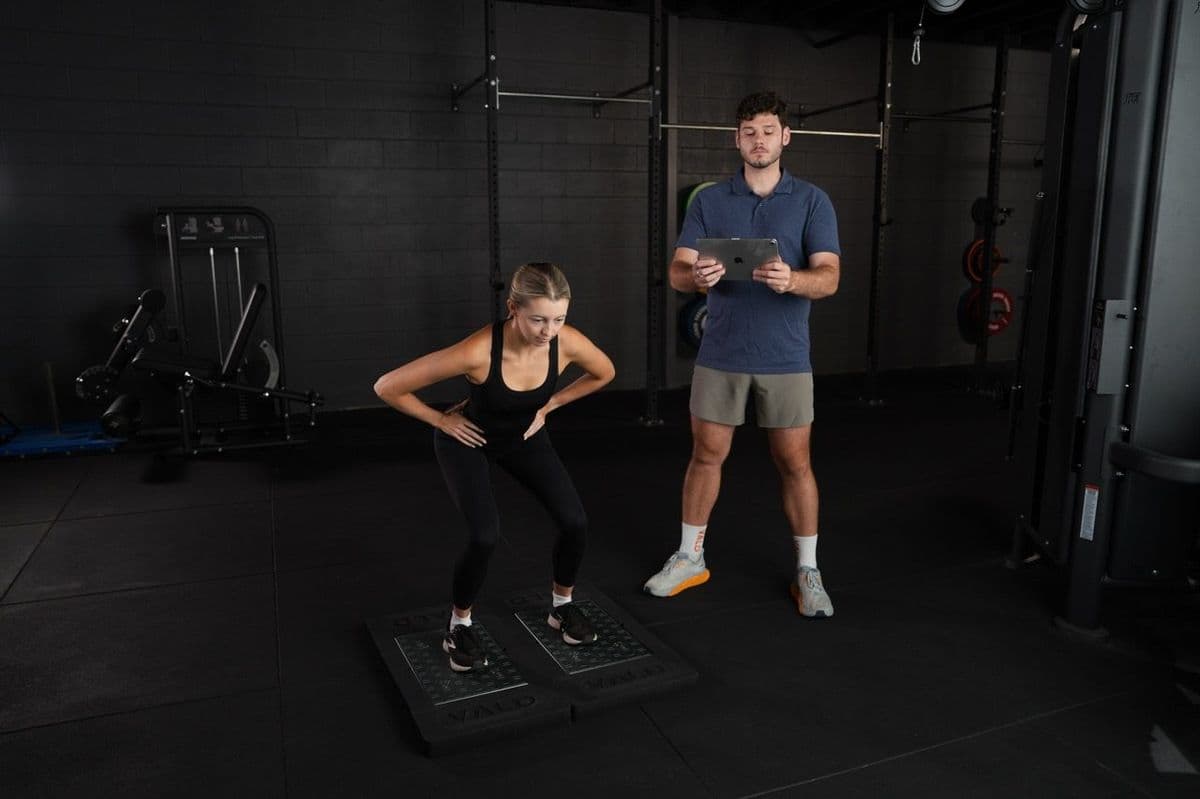
Move Physiotherapy knee strength assessment with VALD force plate

Knee & Hip Osteoarthritis Programme

We run a regular programme for knee and hip osteoarthritis.

Next programme starting early June. Read more about it, and get in touch with our Senior Physiotherapist Hugo Dreux.

Read More →

Why surgery is meant to be the last resort, not the first

Once you've been told you have “bone on bone” knees, the next conversation usually turns to surgery. Either a clean up procedure (knee arthroscopy) or eventually a full knee replacement. It's worth understanding what the evidence actually says about each before you assume that's where this ends.

Knee arthroscopy for osteoarthritis — the “clean up” procedure that used to be common — is now actively discouraged by the Australian Clinical Care Standard.1 A landmark systematic review and meta-analysis published in the BMJ in 2015 concluded that arthroscopy provides “inconsequential” benefit for degenerative knee disease and carries real harms, including infection, deep vein thrombosis, and pulmonary embolism.8 Despite this, thousands of arthroscopies are still performed each year in Australia for osteoarthritis. If it's been offered to you, please get a second opinion before agreeing.

Total knee replacement is a different conversation. For people whose pain and disability are severe and unmanaged by other means, it's a genuinely effective procedure. But it's major surgery. Recovery takes months. Around 20 percent of patients remain dissatisfied with the result a year later. A 2015 Danish trial published in the New England Journal of Medicine compared total knee replacement against an intensive 12-week non-surgical programme of exercise and education. The surgery group had better outcomes on average, but the non-surgical group also improved substantially, and most importantly, two thirds of the non-surgical group never needed the surgery during the trial period.9

Read that again. Two thirds of people who were considered candidates for a knee replacement, when given a structured exercise and education programme instead, improved enough that they didn't need the surgery. The Australian guidelines, the European guidelines, and the American guidelines all now say the same thing: try this first.1,5,6

There is a treatment Australia's clinical guidelines say should come first

The Australian Clinical Care Standard, the RACGP guidelines, OARSI (the international body that sets the global standards), the European Alliance of Associations for Rheumatology — every major body that writes guidelines for knee osteoarthritis agrees on the recommended first treatment. It isn't medication. It isn't injections. It isn't surgery.

It's supervised exercise and education, delivered by a physiotherapist, structured properly, and run for long enough to actually produce a change.1,5,6,7 Not a printed sheet of stretches. Not three sessions of manual therapy. Not a vague “keep walking.” A structured programme, with the right exercises at the right load, supervised, twice a week, for around eight weeks, paired with education on managing flare-ups and pacing.

The reason this works isn't magic and it isn't guesswork. When you load a knee in the right way, in the right doses, the muscles around it get stronger. The joint capsule and ligaments adapt. The brain stops protecting the area as anxiously. Inflammation reduces because the joint is being used the way it's designed to be used, rather than avoided. Pain falls. Function climbs. The X-ray doesn't change, because that's not the variable we're changing. But the way you feel, and the things you can do, change substantially.

What the evidence actually says works

The clearest evidence we have for this approach comes from a Danish programme called GLA:D (Good Life with osteoArthritis in Denmark), developed in 2013 and now run internationally including in Australia. GLA:D follows a specific structure: a short education component covering what osteoarthritis is and isn't, plus twelve supervised neuromuscular exercise sessions over six to eight weeks.4

GLA:D Australia has now collected outcome data on over 12,000 participants. The published 12-month results are these.

31%

Average reduction in knee pain at 12 months

38%

Improvement in quality of life

50%

Reduction in pain medication use

These are averages across more than 12,000 people. The trial we cited earlier, the New England Journal of Medicine knee replacement study, used a similar structure and found that two thirds of patients pre-listed for total knee replacement no longer met the criteria for surgery after completing the programme.9

This is the strongest evidence we have for anything in the management of knee osteoarthritis. Not opinion. Not anecdote. Tens of thousands of patients, measured before and after, on the same scales, with consistent results across countries. The clinical guidelines reflect this evidence. The treatment is real.

What we've built at Move Physiotherapy Beeliar

We run a regular eight week programme for adults with hip or knee osteoarthritis, modelled on the evidence base behind GLA:D and led by our Senior Physiotherapist, Hugo Dreux. Sixteen supervised sessions over eight weeks, twice a week, in small groups capped at five. A one to one assessment with Hugo at the start (included), reassessment at the end on the same measures (KOOS, HOOS, VALD strength) so you can see the change in numbers.

The full programme is $960, or $60 a session. Most people with private health extras pay around $20 to $30 out of pocket per session after rebate. If you attend at least 14 of the 16 sessions and don't improve on the measures we started with, we refund the programme.

If you'd like to know more about how it works, who it's suited to, and when the next cohort starts, the programme page has the detail.

Knee & Hip Osteoarthritis Programme

See the programme and get in touch with Hugo.

See the Programme →

What we'd like you to take from this article

You heard “bone on bone.” The phrase did a lot of damage on the drive home. Most of that damage was caused by the phrasing, not by the underlying condition.

What the X-ray actually showed is one part of one variable in a knee that's far more than its cartilage. The variables that decide how you feel and what you can do are mostly things you can change. The strength of the muscles around your knee. The way you load it day to day. The inflammation in the joint. The confidence with which you use it. Every one of these is on the table.

The treatment that the Australian clinical guidelines recommend you try first is supervised exercise and education, structured properly, run for long enough to produce change. It works. It's backed by the largest dataset we have in knee arthritis care. It's not invasive, it's not expensive, and it doesn't close any doors.

If you're weighing this up, take a look at the programme. Hugo runs the assessments and the classes, and he's happy to talk through your situation before you commit to anything.

Already weighing up surgery?

Talk to us first. The strength you build going into surgery is the strength you'll have coming out. Many people on the public waiting list find they no longer feel they need it by the time their date arrives. Either way, there's no downside.

References

  1. Australian Commission on Safety and Quality in Health Care. Osteoarthritis of the Knee Clinical Care Standard. Sydney: ACSQHC; 2024.
  2. Bedson J, Croft PR. The discordance between clinical and radiographic knee osteoarthritis: a systematic search and summary of the literature. BMC Musculoskelet Disord. 2008;9:116.
  3. Hannan MT, Felson DT, Pincus T. Analysis of the discordance between radiographic changes and knee pain in osteoarthritis of the knee. J Rheumatol. 2000;27(6):1513–1517.
  4. Skou ST, Roos EM. Good Life with osteoArthritis in Denmark (GLA:D): evidence based education and supervised neuromuscular exercise delivered by certified physiotherapists nationwide. BMC Musculoskelet Disord. 2017;18(1):72.
  5. Bannuru RR, Osani MC, Vaysbrot EE, et al. OARSI guidelines for the non-surgical management of knee, hip, and polyarticular osteoarthritis. Osteoarthritis Cartilage. 2019;27(11):1578–1589.
  6. Royal Australian College of General Practitioners. Guideline for the management of knee and hip osteoarthritis. 2nd ed. East Melbourne: RACGP; 2018.
  7. Hurley M, Dickson K, Hallett R, et al. Exercise interventions and patient beliefs for people with hip, knee or hip and knee osteoarthritis: a mixed methods review. Cochrane Database Syst Rev. 2018;4:CD010842.
  8. Thorlund JB, Juhl CB, Roos EM, Lohmander LS. Arthroscopic surgery for degenerative knee: systematic review and meta-analysis of benefits and harms. BMJ. 2015;350:h2747.
  9. Skou ST, Roos EM, Laursen MB, et al. A Randomized, Controlled Trial of Total Knee Replacement. N Engl J Med. 2015;373(17):1597–1606.
  10. Bennell KL, Wrigley TV, Hunt MA, Lim BW, Hinman RS. Update on the role of muscle in the genesis and management of knee osteoarthritis. Rheum Dis Clin North Am. 2013;39(1):145–176.

Knee & Hip Osteoarthritis Programme

Eight week, twice weekly group programme for hip and knee osteoarthritis. Run by Hugo Dreux, Senior Physiotherapist, at Move Physiotherapy Beeliar.