HomeAbout
Services
General PhysiotherapySports PhysiotherapyExercise RehabilitationDry NeedlingRemedial MassageMedicare / EPCWorkCover & ICWADVA Physiotherapy
ConditionsFeesContact
Book OnlineCall 08 6113 8062
★★★★★4.9 · 381 Google Reviews

Knee Osteoarthritis Physiotherapy in Perth

Cartilage doesn't need to be pristine for you to move well and live pain-free. Exercise and physiotherapy are the most effective treatments available.

Knee Osteoarthritis

Knee Osteoarthritis Physiotherapy in Perth

Knee osteoarthritis is extremely common -- particularly in people over 50, those with a history of knee injury, and those who have been active through sport. But a scan showing "wear and tear" does not mean you're destined for pain or inactivity.

The strongest evidence for knee OA management points consistently to one thing: exercise. The joint loads experienced during supervised strengthening are beneficial -- cartilage relies on the movement of joint fluid for nutrition, and progressive loading improves muscular support around the joint, reducing stress on the cartilage itself. The most significant modifiable contributing factors are muscle weakness around the knee (particularly the quadriceps), previous knee injury or surgery, and activity levels. Of these, muscle weakness is the most directly addressable through rehabilitation.

At Move Physiotherapy, we combine manual therapy to restore movement with progressive strengthening targeting the quadriceps, hamstrings, and hip musculature. We use objective VALD force testing to measure your strength deficits precisely and track your response to treatment. Our goal is to get you moving well, reduce your pain, and build the muscular capacity your knee needs to stay active -- for the long term.

Knee Osteoarthritis
Knee Osteoarthritis

Symptoms

Common Signs & Symptoms

Deep aching pain inside, outside, or across the front of the knee
Morning stiffness lasting up to 30 minutes after waking
Crepitus -- grinding, clicking, or crackling sensations with movement
Pain with stairs, squatting, rising from a chair, or prolonged walking
Swelling or warmth in the joint after activity or at end of day
Reduced range of motion -- difficulty fully bending or straightening the knee
A sense of the knee giving way or feeling unstable on uneven ground
Pain that worsens with cold, damp weather or extended inactivity
Bony enlargement or visible deformity around the joint in later-stage OA
Altered gait -- limping, shortened stride, or avoiding full weight-bearing
VALD · AxIT Systems

Technology-Based
Strength Assessment

Included gap-free with every initial assessment.

Knee osteoarthritis is significantly influenced by the strength of the muscles surrounding the joint -- particularly the quadriceps, hamstrings, and hip abductors. Weakness in these muscle groups increases compressive load on the articular cartilage with every step. At Move Physiotherapy, we use VALD and AxIT force measurement technology to objectively quantify these deficits at your initial assessment. This gives us a precise baseline, allows us to track your response to treatment at each stage, and ensures your program is delivering measurable improvements -- not just symptomatic relief.

📊
Quadriceps Strength Deficits
Quad weakness is the most consistent finding in knee OA. We measure it objectively so we know exactly what we are targeting and whether we are improving it.
⚖️
Limb Symmetry Index
Comparing strength between legs identifies asymmetries that increase load on the more affected side -- a key driver of pain and functional decline.
📈
Tracking Treatment Response
Repeat testing at 4-6 week intervals confirms your program is working. If strength is not improving as expected, we adjust the program -- no guesswork.
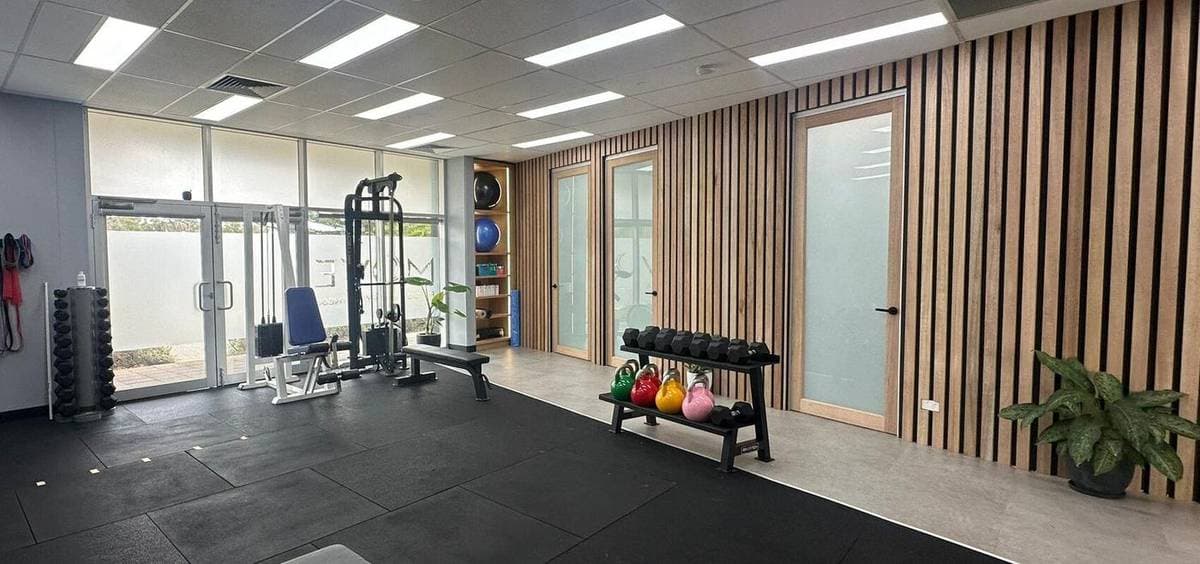
VALD technology assessment at Move Physiotherapy

Gap-free with every initial assessment

Technology-based assessment is included as standard -- no additional out-of-pocket cost.

Our Approach

The Move Process

01
Assessment & Strength Testing
We assess your movement, VALD-measured quad and hip strength, and current activity levels -- identifying what's driving your pain and establishing a precise baseline to track your progress.
02
Manual Therapy & Pain Relief
Joint mobilisation and soft tissue work to improve range of motion and reduce pain. Less pain creates a better environment for rehabilitation to progress effectively.
03
Progressive Strengthening
Progressive quadriceps and hip strengthening -- the most evidence-based intervention for knee OA. VALD testing at 4-6 week intervals confirms your strength is improving and allows us to progress the program appropriately.
04
Activity & Load Management
Guidance on remaining as active as possible while managing flare-ups -- including activity modification strategies that protect the joint without leading to deconditioning.
05
Long-Term Self-Management
Education on OA pain science, self-management strategies, and a home or gym-based maintenance program to preserve your gains independently after discharge.

Why Move Physiotherapy

What sets us apart

Exercise is the Evidence
Progressive exercise and physiotherapy produce better outcomes than passive treatment or early surgery for most knee OA patients. Every program we design is built around this unambiguous evidence base.
Objective Strength Measurement
We use VALD dynamometry to measure quad and hip strength at baseline and at regular intervals. You see the data -- and your progress is confirmed by numbers, not just how you feel on the day.
GLA:D Program
We offer the GLA:D (Good Life with osteoArthritis: Denmark) program -- a rigorously evaluated group education and exercise program. GLA:D shows significant reductions in pain and improved function at 12 months.
Pain Science Education
Understanding why OA pain behaves the way it does -- including central sensitisation, fear-avoidance, and the relationship between strength and pain -- is an essential part of long-term self-management.
Pre-Surgical Optimisation
For patients proceeding to knee replacement, pre-operative prehab significantly improves post-surgical outcomes. Quadriceps strength before surgery is one of the strongest predictors of recovery speed after it.
Post-Surgical Rehabilitation
We provide structured rehabilitation following total knee replacement, coordinating with your orthopaedic surgeon to ensure your recovery progresses optimally from day one post-op.
Avoiding Unnecessary Surgery
Total knee replacement is a major procedure with 3-6 months of recovery. Physiotherapy is the appropriate first-line treatment and should be genuinely exhausted -- with a supervised program, not just analgesia -- before surgery is considered.
3 Convenient Locations
Beeliar, Booragoon and East Fremantle -- with early morning, evening and Saturday appointments. Online booking in under 2 minutes.

Common Questions

Frequently Asked Questions

Is it safe to exercise with knee osteoarthritis?+
Yes -- and exercise is the single most important treatment for knee osteoarthritis. A longstanding misconception is that "bone on bone" means exercise will cause further damage. The evidence does not support this. Cartilage does not have a blood supply and relies on the movement of joint fluid for nutrition -- exercise, particularly low-impact progressive loading, is actually beneficial for cartilage health. The key is appropriate type and dose: progressive resistance training targeting the quadriceps and hip musculature produces the greatest improvements in pain and function. High-impact activities may need to be modified, but most people with knee OA can return to significant activity levels with appropriate rehabilitation.
Do I need a knee replacement for osteoarthritis?+
Most people with knee osteoarthritis do not require knee replacement, at least not for many years -- if ever. Total knee replacement is a major surgical procedure with a significant recovery period (typically 3-6 months to full function) and is most clearly appropriate when pain and functional limitation are severe, conservative management has been genuinely and thoroughly exhausted, and quality of life is significantly impaired. The important caveat is that "genuinely exhausted" means a proper supervised exercise program -- not just analgesia and occasional walking. Research consistently shows that a well-structured physiotherapy program produces outcomes comparable to surgery for most patients with moderate knee OA.
What is the GLA:D program?+
GLA:D (Good Life with osteoArthritis: Denmark) is a standardised education and exercise program for hip and knee osteoarthritis developed at the University of Southern Denmark. It consists of two education sessions covering osteoarthritis, pain science, and self-management strategies, followed by 12 neuromuscular exercise sessions over 6-8 weeks. The exercises are specifically designed to improve the neuromuscular control and strength deficits consistently found in OA patients. The program has been evaluated in large-scale studies with results showing significant reductions in pain and improved function at 12 months. It is delivered at Move Physiotherapy by GLA:D-certified physiotherapists.
Can weight loss help knee osteoarthritis?+
Yes, significantly. Each kilogram of body weight is estimated to produce 3-4 kg of force across the knee joint during walking. Even modest weight reduction (5-10% of body weight) produces measurable reductions in knee pain and improvements in function. Weight loss and exercise combined produce greater benefits than either alone. The mechanisms include reduced mechanical loading, decreased systemic and local inflammation, and improved muscle-to-body mass ratio. Your physiotherapist can advise on appropriate exercise for both OA management and supporting weight management goals, and can refer to a dietitian when indicated.
How do I know if my knee pain is from osteoarthritis or something else?+
Knee OA typically has a gradual onset in people over 45, is associated with activity and relieved by rest in early stages, produces morning stiffness lasting less than 30 minutes, and is confirmed by X-ray changes -- though imaging findings do not always correlate with symptom severity. Other causes of knee pain including tendinopathy, bursitis, meniscal irritation, and patellofemoral pain can coexist with OA or be mistaken for it. A thorough physiotherapy assessment differentiates these presentations clinically. This distinction matters because the treatment priorities differ: active tendinopathy alongside OA changes the loading approach, and bursitis may require injection before exercise can be progressed effectively.
Will my knee osteoarthritis get worse over time?+
Not necessarily, and not inevitably. Knee OA does not follow a predictable linear progression -- many people have stable or even improving symptoms over years with appropriate management. The most important modifiable factors are muscle strength, activity levels, body weight, and pain management. People who maintain strong quadriceps and hip musculature consistently have better long-term outcomes than those who become sedentary. The fear-avoidance cycle -- where pain leads to reduced activity, which leads to weakness and further pain -- is the main driver of progression in many patients. Breaking this cycle with supervised exercise is the most impactful thing you can do for long-term knee health.

Ready to get moving?

Beeliar, Booragoon and East Fremantle -- early morning, evening and Saturday appointments available.